
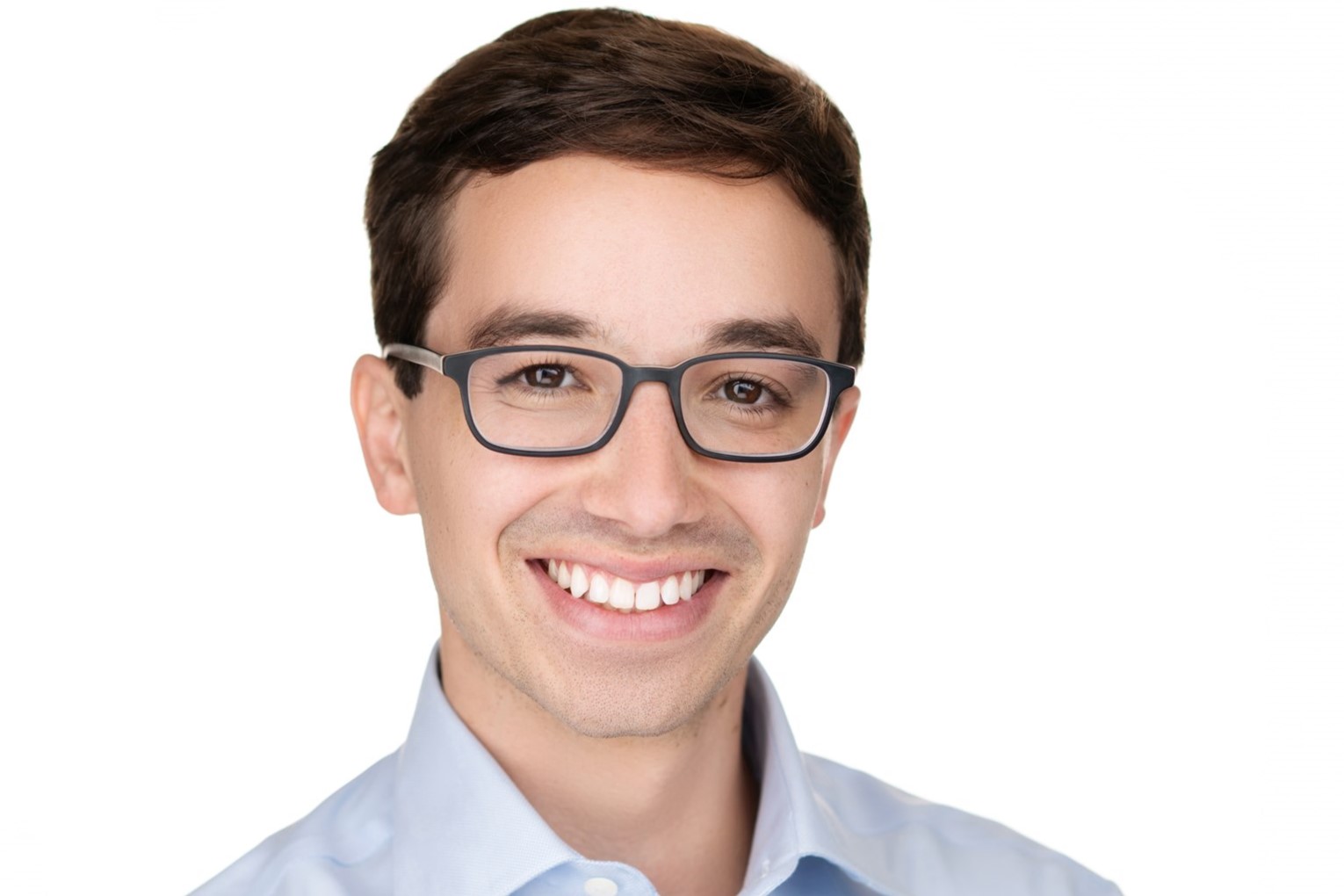


Securities Attorney Nico Banks
Nico Banks represents individual investors in claims against individuals and entities that participated in selling them failed investments. He brings those claims in FINRA arbitration, in Oregon state court, in the United States District Court for the District of Oregon, and in other forums. Many of his clients lost money in alternative investments such as non-traded real estate investment trusts, oil-and-gas partnerships, structured products, and private placements, which are often unsuitable for the individual investors to whom they are sold.
Background
Mr. Banks graduated from Claremont McKenna College in the top 15 percent of his class, and from Cornell Law School in the top 15 percent of his class. He began his career as an associate in the antitrust practice group of Cleary Gottlieb Steen & Hamilton, one of the leading antitrust practices in the country. Wanting to return to investor representation, he then practiced at the Kurta Law Firm, a small firm devoted to representing individual investors. Mr. Banks began working as an attorney at Banks Law Office in September 2023.
Claims Against Brokerage Firms
Investors who lose money in unsuitable investments can often recover from their brokerage firms. Before a non-traded investment reaches individual investors, the brokerage firm is responsible for conducting due diligence on it and approving it for sale. A firm that misses warning signs that an investment is likely to fail may be liable to the investors who bought it.
For that reason, Mr. Banks often advises clients not to sue the individual broker who recommended the investment. An individual broker does not recommend a non-traded investment until the brokerage firm he or she is affiliated with has completed due diligence and approved the investment for sale. Because the individual broker takes no part in that process, he or she is generally not responsible for the firm’s due diligence failures.
In some circumstances Mr. Banks does recommend suing the individual broker in addition to the firm. If a broker told a client that a non-traded real estate investment trust was a low-risk investment, for example, the client may have a fraud claim against the broker for making a false statement.
Mr. Banks also represents investors whose brokers misrepresented the condition of their accounts, churned their accounts (that is, generated excessive commissions by trading in an account far more often than the client’s objectives warranted), or engaged in other misconduct.
Fees
Like most attorneys who represent investors, Mr. Banks typically works on a contingency fee. His clients pay nothing unless he recovers money for them, and even then they pay nothing out of pocket, because his fee is a percentage of the recovery.
Mr. Banks structures his practice to keep that percentage low. He advises clients to decline inadequate settlement offers and to proceed to hearing or trial when necessary, which he believes improves recoveries over time. Because his clients’ claims often arise from the same investments, he can frequently group them into a single proceeding and spread the cost of the work across the group.
Mr. Banks also offers pro bono representation to low-income individuals.
Recent Results
Mr. Banks has represented victims of several Ponzi schemes based in Oregon, bringing claims under Oregon’s securities fraud statute, ORS 59.115. Many of those proceedings settled on confidential terms. Collectively, his clients who brought claims under ORS 59.115 have recovered more than $4.5 million.
In a FINRA arbitration against the former chief executive officer of a defunct broker-dealer, Mr. Banks represented a group of investors who prevailed on their claims. When the respondent refused to pay the award, Mr. Banks filed a petition for involuntary bankruptcy against him and ultimately recovered more than $700,000 for his clients in that proceeding.
Investors in GWG L-Bonds have recovered more than $1 million through FINRA arbitrations that Mr. Banks brought against the firms that sold those bonds.
In a margin liquidation case, Mr. Banks defended an investor whose broker-dealer had liquidated his portfolio to satisfy debts from trading on margin and then sued him for the balance owed. The broker-dealer dismissed the case without any judgment or recovery against his client.
As class counsel in a class action against a defunct company that sold e-commerce services as investments, Mr. Banks obtained class certification after more than two years of litigation, along with a settlement that provided a meaningful recovery for the investors.
Prior results do not guarantee or predict a similar outcome in any other matter.
Publications
- Banks, N., “GWG L-Bonds Value and How We Got Here,” Securities Fraud Lawyers Blog.
- Banks, N., “GWG L-Bond Investors Continue to Lose Money in October 2023,” Securities Fraud Lawyers Blog, October 2023.
- Banks, N., “Fitbit Allegedly Failed to Pay for Fitbit Ionics Submitted in the Recall Between 2022 and 2023,” Securities Fraud Lawyers Blog, September 2023.
- Banks, N., “Competition Policy During Pandemics: How to Urgently Produce Healthcare Goods and Services While Avoiding Economic Disaster,” Journal of Antitrust Enforcement, May 2021.
- Hoffman, B., and Banks, N., “High Court Blow to FTC Restitution Could Be Temporary,” Law360, April 2021.
- Public Investor Advocate Bar Association ("PIABA")
Member Since: 2022 - current
Co-Chair of the PIABA Diversity Committee
- California - Membership No. 344705
Member Since: 2022 - current
- Washington, D.C. - Membership No. 1734563
Member Since: 2021 - current
- Cornell Law School - J.D. - 2020
Graduated in the top 15 percent of the class of 2020
- Claremont McKenna College - B.A. in Economics and M.A. in Finance - 2017
Graduated in the top 15 percent of the class of 2017.